Orland Park Epoxy Flooring installs flake epoxy floor systems in Orland Park, IL, serving surrounding cities including Palos Heights, Mokena, Worth, Palos Hills and Crestwood. A flake floor is the system we install most often, and after 20+ years of installing it we know that the look depends on the chips but the life of the floor depends on the slab preparation underneath them.
A flake system combines a pigmented epoxy base, a broadcast of colored vinyl chips and a clear protective topcoat. The chips hide dust, tire marks and small imperfections, add texture underfoot and give the floor a finished, speckled appearance. It suits garages, basements, mudrooms, workshops and many commercial spaces, and it is more forgiving to live with than a smooth solid color or a glossy metallic floor.
Every proposal names the base and topcoat products, the flake blend and size, the broadcast rate and the finished thickness. We grind every slab and test it for moisture before pricing, and we show you physical flake samples on your own floor before you choose.
How a Flake Epoxy Floor Is Built
Ground Slab and Pigmented Base Coat
The slab is diamond ground to open a real profile, then cracks and spalls are repaired and ground flush. A pigmented base coat, usually a 100% solids epoxy, is rolled out in a color that blends with the chip mix. The base coat bonds into the concrete and holds the flakes, so its thickness and coverage matter as much as the chips that go into it.
Broadcasting the Flake to Refusal
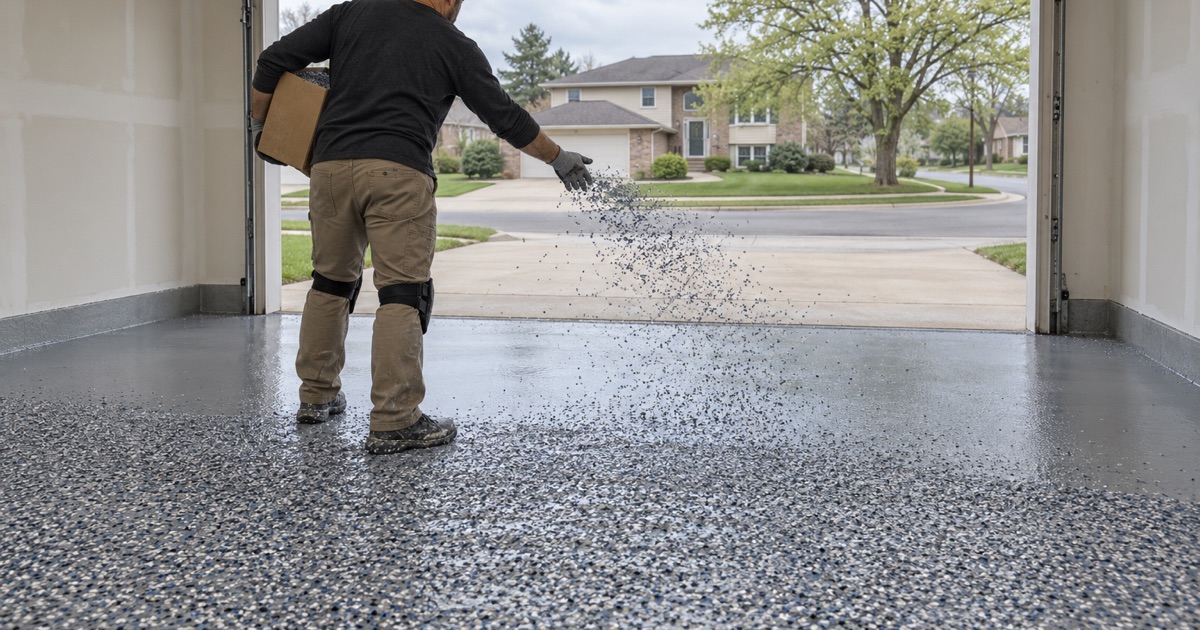
While the base is still wet, we broadcast vinyl flake by hand across the floor, throwing it up and letting it fall so it lands evenly. For a full broadcast we keep going until the surface will not accept any more chips, which is called broadcasting to refusal. That gives uniform color with no bare base showing and a consistent texture from wall to wall.
Scraping, Vacuuming and the Clear Topcoat
Once the base has cured, loose and standing flakes are scraped down and vacuumed away, leaving a flat, textured surface. A clear topcoat, usually polyaspartic or polyurea, seals the chips and takes the wear. That topcoat resists ultraviolet light, abrasion and road salt better than an epoxy topcoat, and it sets the final sheen and slip resistance of the floor.
Choosing Flake Size, Blend and Coverage
Chip Size and Pattern
Vinyl flake comes in several chip sizes, from fine to large. Finer chips create a tight, granite-like pattern that looks calm in basements, offices and commercial restrooms. Larger chips create a bolder, more speckled look that reads well across a big garage. Mixed sizes are also available, and chip size slightly changes how much texture the finished floor has.
Color Blends and Lighting
Flake blends range from soft grays and tans to high-contrast mixes with black, white and accent colors. Lighter blends brighten a dark garage or basement, while darker blends hide dirt between cleanings. Lighting changes the look a great deal, so we lay samples on your floor under your own lights rather than choosing from a printed chart.
Full Broadcast Versus Partial Broadcast
A full broadcast covers the base completely with chips, giving the most texture and the most even color. A partial broadcast scatters chips over a solid base so the base color shows through, which costs less in material and creates a different look. Partial floors have more smooth area under the topcoat, so they can be slicker when wet and show wear in traffic lanes sooner.
Texture, Wear and Winter Use
Slip Resistance by Specification
A flake floor’s grip comes from the chips and the topcoat over them. We control it by the broadcast density, the topcoat thickness and any grit additive mixed into the topcoat. A mudroom or garage that sees snowmelt gets more texture, while a dry basement office can be smoother and easier to mop. The texture is specified in writing, not promised as a slogan.
Brine, Rock Salt and Hot Tires
In garages, a flake floor takes brine, rock salt and calcium chloride carried in all winter, along with hot tires that can pull up a weak coating. A dense, built-up system with a polyaspartic topcoat keeps salt on the surface where it can be squeegeed away, and enough total thickness over a ground profile resists hot tire pickup in the wheel tracks.
Hiding Wear and Daily Dust
The speckled pattern is the reason many owners choose flake: dust, small scratches, tire marks and minor stains disappear into the chips. That makes a flake floor easier to live with than a solid color in a busy garage or entry. It still needs regular sweeping and washing, because grit left on any floor slowly dulls the topcoat.
Where Flake Floors Work Best
Garages and Workshops
Garages are the most common place for a flake floor, and the system suits them well because it hides tire marks and adds grip when the floor is wet. Workshops benefit too, since dropped tools and spills are less visible and easy to clean up. In a shop where you want to see small dropped parts, a finer chip or lighter blend helps.
Basements, Mudrooms and Laundry Rooms
In a basement, mudroom or laundry room, a flake floor gives a durable, mop-friendly surface with a warmer look than bare concrete. Basement slabs are always tested for moisture first, and a moisture-mitigation primer can go under the system when readings call for it. Finer chips and softer colors often suit these finished spaces.
Commercial Restrooms, Locker Rooms and Break Rooms
Commercial restrooms, locker rooms and break rooms need floors that clean easily and resist moisture and cleaners. A flake system with a coved base runs up the wall to remove the seam where water collects, and the chips hide the wear these rooms see every day. We schedule commercial installations after hours so the rooms are back in use quickly.
- 20+ Years on Concrete
- Moisture Tested Before Pricing
- Written Specs on Every Quote