Commercial Epoxy Flooring Versus Home Jobs
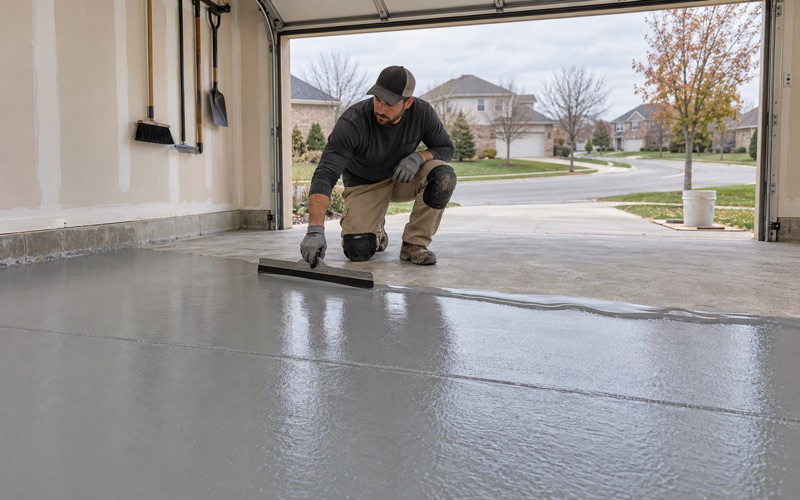
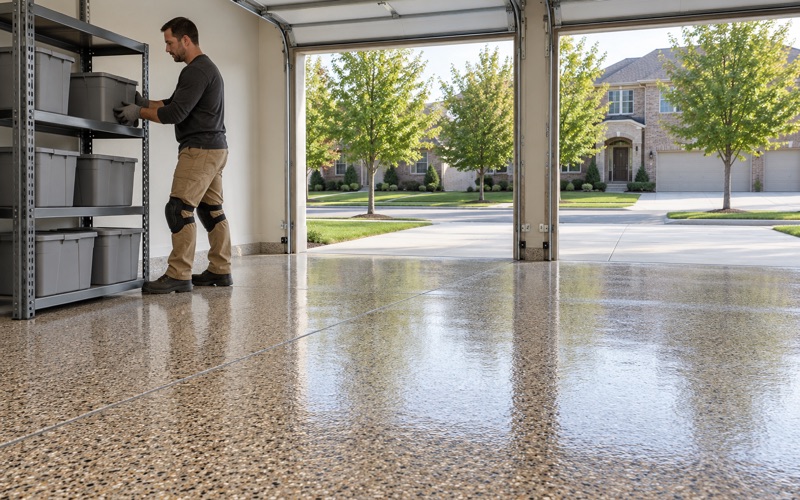
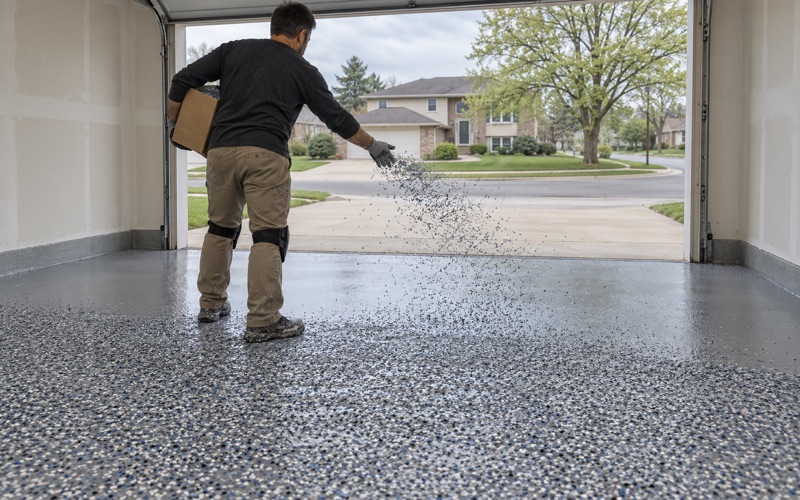
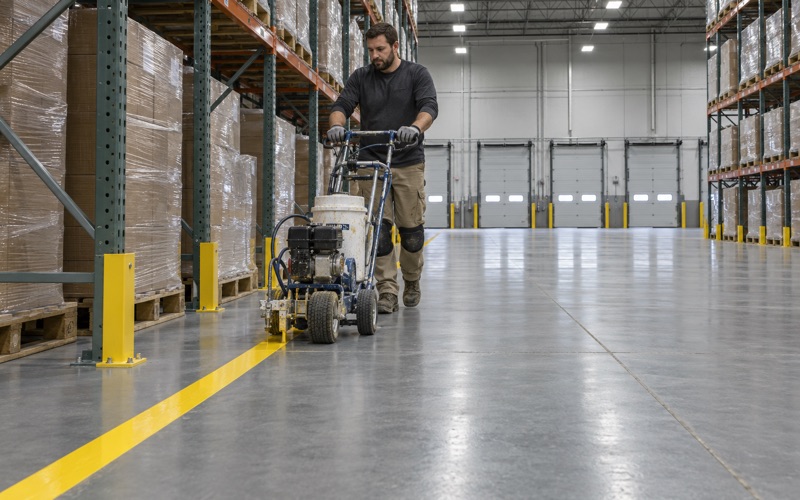
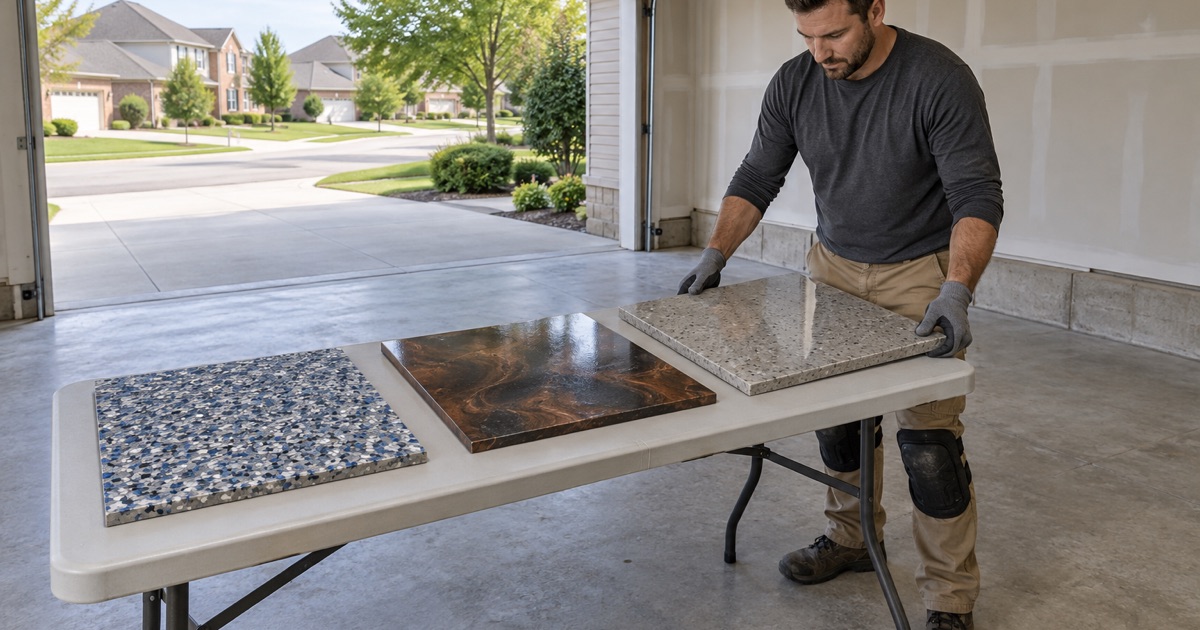
Commercial floors add heavier traffic, stronger cleaning chemicals, health and safety rules and a schedule built around the business. We plan phasing, access and cure times with the owner or facility manager first, then pick the system for forklift and pallet jack wheel loads, carts or foot traffic.
Dealership Service Drive Floors
Automotive sales were the village’s largest sales-tax category in 2022, and dealership service drives take hot tires, oil and coolant drips and winter brine dragged in from the lot. Those floors need a ground profile, a chemical-resistant topcoat and a texture that stays safe when wet.
Retail and Furniture Showroom Floors
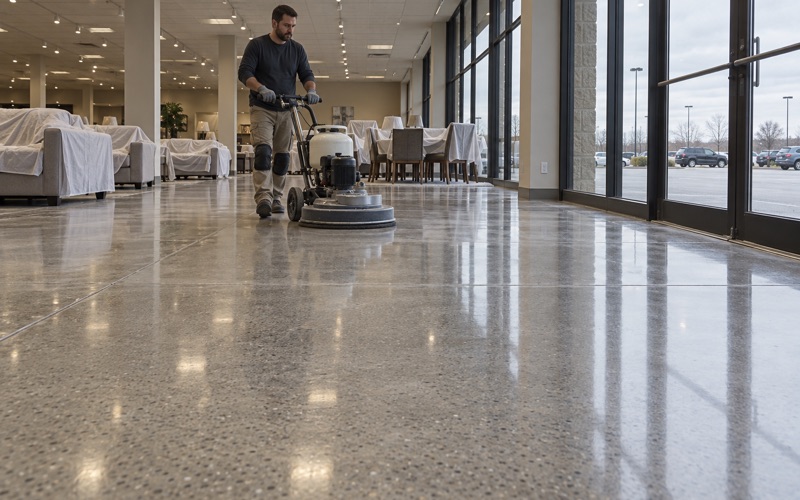
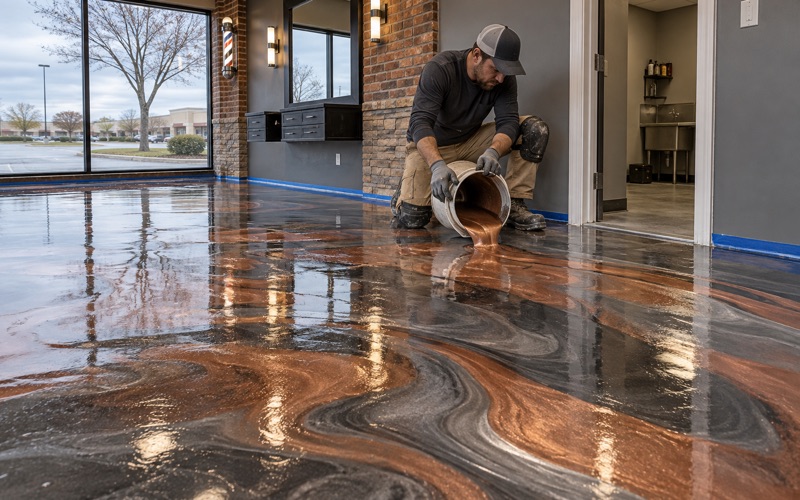
Retail and furniture showrooms have to look finished and be open the next morning. We phase the floor in sections, often overnight, and use fast-curing polyaspartic topcoats where the schedule calls for them, so displays go back in place instead of waiting out a long cure.
Banquet Hall and Back-of-House Coatings
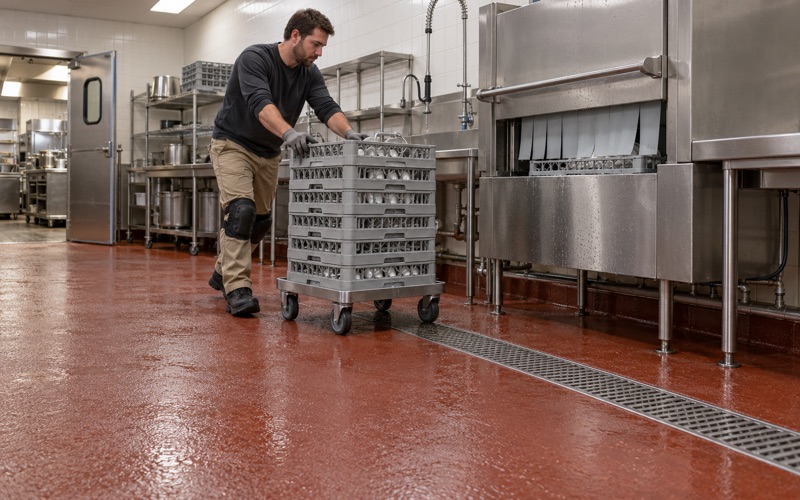
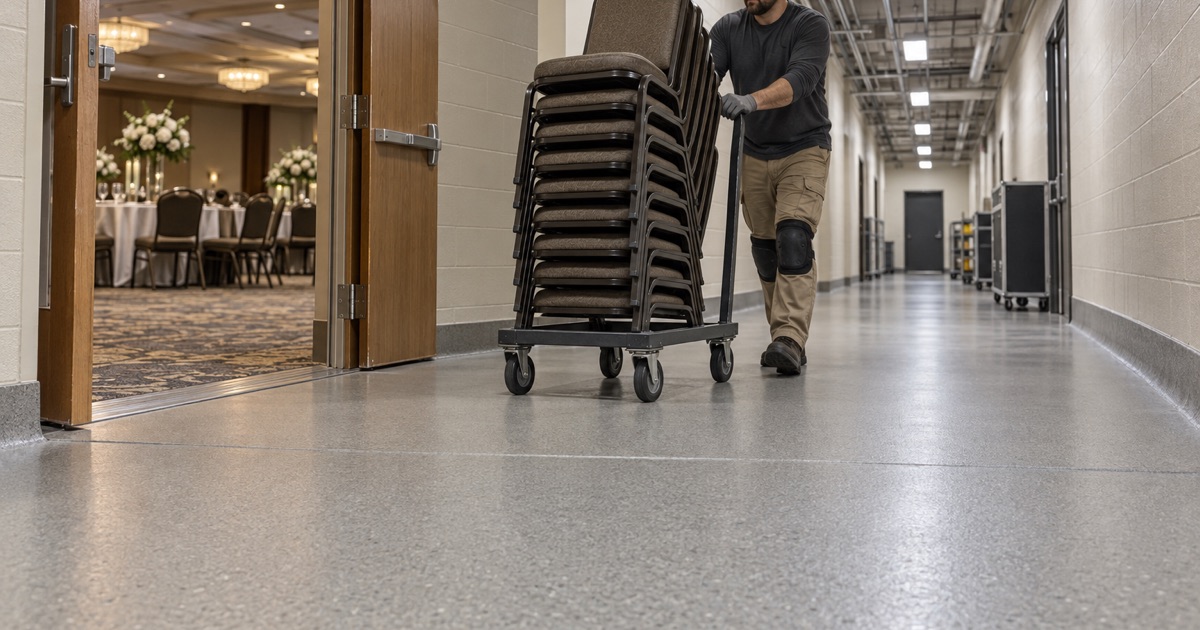
Banquet hall service corridors, kitchens and back-of-house floors take loaded carts, dropped food and constant mopping. We schedule those floors around booked events, using weekend or overnight windows when a hall cannot close, and coat them with a seamless system that resists grease and cleaners.
Restaurant and Bakery Kitchen Floors
Kitchen floors need to be smooth, durable and easy to clean, and FDA Food Code section 6-201.13 calls for coved, closed floor and wall junctures in many food areas. We run the coating up the wall as an integral cove base, so there is no open seam for grease and water at the edge an inspector checks.
Urethane Cement for Hot Water and Cleaners
Standard epoxy can soften under repeated hot water washdowns, steam and thermal shock. Urethane cement handles hot water and strong cleaners far better, so we specify it for kitchens, breweries and food prep rooms that would wear through an epoxy in a short time.
Gym and Fitness Center Floors
Gyms see dropped weights, sweat and daily disinfecting. We put a tough, textured coating in walkways, locker rooms and wet areas and leave lifting zones to rubber matting, because no floor coating absorbs a dropped barbell on its own.
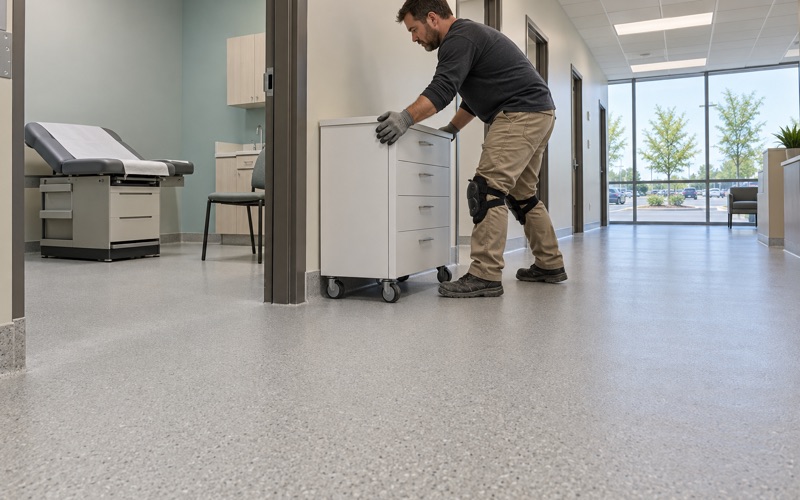
Medical Office and Clinic Floors
Clinics and medical offices clean with strong disinfectants every day, which can dull or soften the wrong finish. We choose chemical-resistant topcoats, seamless coved edges and textures that still clean thoroughly, and we phase the work around patient hours so the practice keeps seeing people.
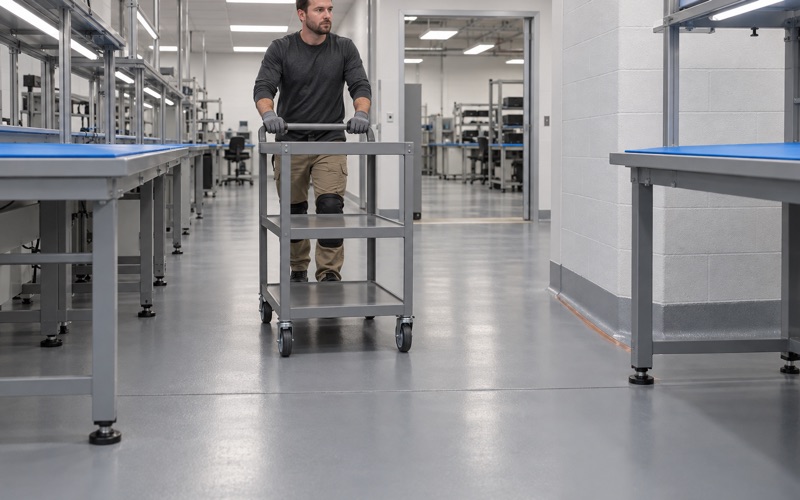
Static-Dissipative and ESD Flooring
Electronics assembly areas and server rooms need floors that bleed static charge to ground within a specified resistance range. Static-dissipative and ESD systems rely on conductive primers and grounding points, and we test resistance after cure rather than assuming the product reached the range.
Illinois VOC Limits for Floor Coatings
The Chicago area falls inside the 2015 ozone nonattainment area, and Illinois limits VOC content for floor and industrial maintenance coatings under 35 Illinois Administrative Code Part 223. Those limits bind whoever applies the coating, so we choose products inside them rather than leaving compliance to the customer.
Night and Weekend Floor Work
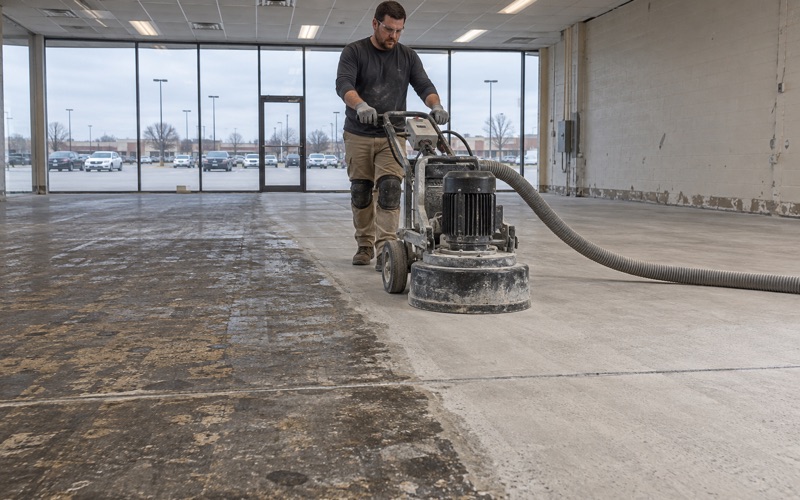
When a business cannot close, we work after hours and on weekends, phase the floor in sections and plan cure times so staff and customers walk on finished floor in the morning. Dust is vacuumed at the machine and ventilation is planned, so a working space is not left with grit and odor.